Rediscovering Signwriting Brushes in the Hand Lettering Revival
Posted by Art Supplies Castlemaine on 24th Jul 2026
Why Hand Lettering Is Capturing Artists’ Imaginations
Hand lettering is turning up everywhere, from painted shopfronts and food trucks to wedding boards and large-scale murals. In creative regional towns like Castlemaine, you can walk down the street and see brush-written words that feel alive, each stroke holding a bit of the maker’s personality. This is not nostalgia for its own sake; it is a genuine return to working slowly with tools, paints, and surfaces that respond in real time.
Many artists and designers are stepping away from purely digital lettering because they miss that physical connection. A slightly wobbly stroke or a subtle change in pressure can give a word warmth that a font just cannot replicate. When you are holding a brush, you feel the drag of paint, the tooth of timber or paper, and there is a sense that what you are making might actually stick around for decades, not disappear with the next software update.
For painters, illustrators and designers who already spend time choosing good fine art supplies, signwriting feels like a natural extension of what they do in the studio. You are still thinking about line, weight, composition and colour harmony; you are just applying them to letters instead of figures or landscapes. We see a lot of artists treat brush lettering as another voice in their visual language, one that sits comfortably alongside their canvases, prints and sketchbooks.
What Makes a Signwriting Brush Different
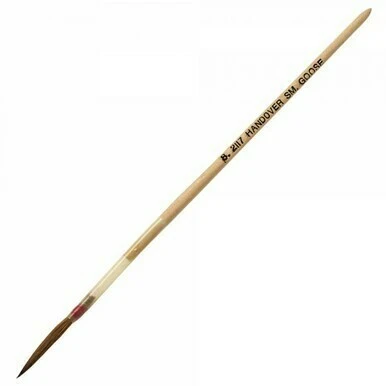
A signwriting brush might look simple, but the details matter a lot when you are trying to pull a clean, confident stroke. The hair is usually a specific blend chosen for spring and paint-holding capacity. Traditional lettering quills often use sable or similar natural hair for a silky release of paint, while modern synthetic or mixed hair options offer durability and a slightly snappier feel. The ferrule tends to be longer and slimmer than a standard round brush, which keeps more hairs working in unison, and the handle is often lightweight so it balances well when held between the fingers.
Different signwriting brushes have their own specialties. Lettering quills are the workhorses for everyday alphabets and general sign work. Stripers are long, slender brushes that excel at pinstripes, outlines and long, flowing curves. Liners are fine and responsive, great for hairlines, flourishes and small text. Fitches are usually shorter and broader, handy for block letters, filling shapes and working on textured surfaces.
When people are used to student-grade tools, it can be surprising how much difference a better-made signwriting brush makes. Just as with other fine art supplies, quality hair, a well-crimped ferrule and a properly shaped head give you lines that sit where you want them, with fewer fuzzy edges and skips. A good brush holds its shape longer, responds predictably, and turns practice sessions into something satisfying rather than frustrating.
Choosing the Right Brush for Your Lettering Style
Matching your brush to your project is half the battle. Bold shop signage on timber or metal usually needs larger lettering quills or fitches that will carry enough paint for strong, opaque strokes. Delicate invitations or sketchbook titles feel better with small quills or liners that allow for fine detail. Chalkboard menus can work well with shorter brushes that give you more immediate control close to the surface, especially if you are working with water-based paints or liquid chalk markers.
It helps to think about a few key factors before you start.
- Surface: Glass, metal and enamelled panels are smoother and reward softer hairs and well-thinned paint. Rough timber or textured walls may suit slightly stiffer hair that can push pigment into the valleys.
- Paint type: Enamels flow slowly and level out beautifully; acrylics dry faster and can need quicker work; inks and gouache favour lighter touches and finer brushes.
- Letter size: Large window slogans want bigger brushes that can complete a stroke in one pass, while journal pages call for petite tools.
- Experience level: Beginners often find medium-sized quills easier than very fine liners, which show every tiny shake.
A simple starting setup for most beginners might be a mid-sized lettering quill, a smaller liner and a flat or fitch for filling and block letters. More experienced signwriters often add specialist stripers and a broader range of sizes. At Art Supplies Castlemaine, we focus on keeping a thoughtful selection so artists can compare options without being buried under dozens of almost-identical brushes.
Essential Paints, Surfaces and Supporting Tools
Signwriting brushes come alive when paired with the right paints. Traditional signwriters often favour oil-based enamels for outdoor work because they level nicely and dry to a strong finish. For indoor projects and mixed-media pieces, many artists choose fluid acrylics, acrylic inks or gouache for their quick drying and wide colour choices. Some like to keep a separate set of brushes for solvent-based products and another for water-based, to keep cleaning simple and predictable.
The surface you write on changes everything. Primed wooden panels or signboard give a forgiving base that takes paint cleanly. Glass and metal reward patience with surface prep and careful degreasing, which helps paint grip and leaves edges crisp. Chalkboards and matte-coated panels can be wonderful for temporary menus and seasonal notes, especially when paired with more easily removable paints. Good-quality papers, from hot-press watercolour sheets to mixed-media pads, are perfect for practice, layout work and framed lettering pieces.
Certain supporting tools make life much easier:
- Mahl stick, to steady your hand and keep it off fresh paint.
- Palettes and dippers, for thinning and holding paint at the right consistency.
- Brush soap and cleaning jars, to keep hairs conditioned and shaped.
- Pencils, layout markers, tapes and rulers, for planning guidelines and spacing.
A simple cleaning routine, rinsing gently, soaping until the water runs clear, then reshaping the tip, will greatly extend the life of every brush in your kit.
Building Skill From First Strokes to Confident Signwriter
Signwriting is all about muscle memory. Straight lines, smooth curves and consistent pressure do not come from talent alone; they come from repetition. Many artists start with simple drills: lines, ovals, S-shapes, then move on to basic strokes that repeat across letterforms. Practising full alphabets in both upper- and lower-case helps your hand learn the rhythm of each character.
Copying classic letterforms is a tried and true way to grow. You can print or sketch alphabets you like, place them beside your panel and work slowly until your hand starts to understand their structure. Grid systems and pounce patterns (perforated paper templates tapped with chalk dust) help when you are taking a design from small scale to a window or wall.
Digital tools blend neatly with brushwork too. Many designers map out type layouts in vector or drawing software, refine spacing and hierarchy, then transfer the design to the physical surface using grids, projectors or printed guides. This approach suits people who are already comfortable on screen but want their final letters to have the richness of real paint.
At Art Supplies Castlemaine, we see signwriting as an ongoing practice rather than a skill you either have or do not. The right tools, sensible starting exercises and a willingness to keep at it will gradually shift you from hesitant strokes to lettering that feels confident and expressive.
Bring Your Words to Life with Brush and Paint
Hand lettering and signwriting open up creative and commercial possibilities that sit comfortably alongside other studio work. From a small quote on a bedroom wall to a full shopfront, from limited-edition prints to personalised gifts, painted letters turn everyday words into visual experiences. They invite people to slow down, read and enjoy the craft that went into them.
When you treat signwriting brushes as another instrument in your wider set of fine art supplies, they stop feeling like specialist tools reserved for a few professionals. They become just as approachable as your favourite round brush or pen, ready for anything from sketchbook experiments to serious commissions. With patience, a handful of well-chosen materials and a curious mindset, your lettering can become as distinctive and expressive as any painting or drawing in your practice.
Get Started With Your Project Today
If you are ready to take your next piece from idea to finished work, our carefully curated range of fine art supplies is here to support you. At Art Supplies Castlemaine, we are happy to help you choose the right tools, papers and colours for your style and budget. Drop in for a chat or contact us to talk through what you need for your upcoming projects.