Why Handmade Printmaking Papers Absorb Ink Differently
Posted by Art Supplies Castlemaine on 11th Jun 2026
When you pull your first good print, it often catches you off guard how much the paper really matters. Even with a well-prepped plate and well-balanced ink, the result can shift depending on the sheet beneath it. Handmade papers do not behave like machine-made ones. They take ink differently, hold texture longer, and often surprise you on the press.
If you have been adjusting your technique but still not getting the impression you want, it might be worth looking more closely at your materials. We hear this often when printmakers come in looking for printmaking supplies. Sometimes, it is not the ink or the roller that is making the difference. It is the paper’s structure, moisture levels, or surface qualities changing how the ink settles into place.
There is a reason so many artists keep returning to handmade options once they find the right fit. Understanding the way these papers hold ink can take your prints up a notch without needing to change much else in your setup.
What Makes Handmade Papers Different
Machine-made and handmade papers start with the same idea, pressed fibres joined into a sheet, but the details change everything. Most machine-made papers have more consistent surfaces. They are built for even thickness, flat structure, and repeatable output. Handmade papers keep the marks of their pulp and mould.
Here is what gives handmade paper its character:
- The fibre distribution is not pressed the same way every time, which can lead to stronger edges or soft, thinned centres.
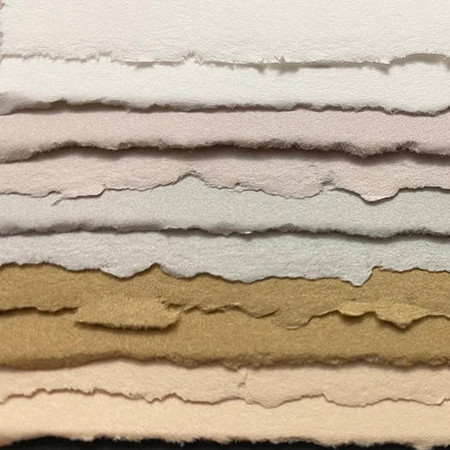
- Deckled edges form naturally along the mould wall and may affect plate alignment.
- Tub-sizing (adding size after the sheet is made) creates different absorbency across the sheet. This sizing step is often done by hand, leading to slight changes from one sheet to the next.
These qualities often appeal to artists because they add personality to a print, but they come with trade-offs. What works beautifully for one plate might not suit another, even if the paper comes from the same batch. In our range, for example, we stock Calligraphy Hemp Paper Handmade Chinese Half-Ripe 50x100cm, a natural white handmade hemp sheet that is lightly sized, deckle edged, and 30gsm, which gives a delicate, absorbent option when you want a fine handmade surface.
How Ink Behaves on Handmade Paper
Handmade paper does not just look different, it behaves differently as ink hits its surface. The way the fibres are shaped and layered leaves small gaps. Some areas may soak up more pigment, while others may resist it slightly depending on the way the sheet has dried or how it has been sized.
Different inks respond in different ways:
- Oil-based inks tend to stay on the surface longer before setting. That gives time to wipe and adjust, but it also means they can smudge or shift more easily during pulling.
- Water-based inks are absorbed faster, especially on drier handmade sheets. The result is often a softer, slightly muted impression.
- Mixed inks or extended drying times may cause some bleed past the etched lines if the surface picks up too much water too quickly.
Changes in weather, such as the cold, dry air we tend to get in June, can make the paper thirstier, grabbing more ink than expected. This is sometimes why shadows look heavier or highlights close off unexpectedly in winter pressings.
Some printmakers lean into that look. The added texture brings dimension and breaks up uniform impression lines in a way they appreciate.
Matching Your Technique to the Paper
Not all printmaking methods work equally well on handmade sheets. When we pick a paper, we look at what the plate needs to show. Some papers grip too much ink for light intaglio. Others do not hold strong carving detail cleanly enough for block work.
Here is how we usually match it up:
- Etching works best with smooth but flexible paper, something that can sink into grooves but release cleanly without too much fuzz or pull.
- Drypoint often asks for very soft paper. Handmade options with less internal sizing help catch the burr and show that rich, velvety line.
- Linocut and woodcuts need grip, especially along broad areas. Handmade papers with more tooth hold ink in large-carved designs better than slicker sheets.
Testing can help. We recommend pulling a small section print before running a full series to see how the fibres respond to the pressure, ink load, and moisture.
Things to Consider When Buying Handmade Paper
Not all handmade sheets behave the same, even when they are labelled the same type. That is why inspecting them in person when possible helps a lot. Layer thickness, colour tone, and wet strength all play a role in performance.
Here is what we look for when choosing paper for printmaking:
- Steady thickness across the whole sheet so the plate grabs evenly
- Few air pockets or soft spots, which can cause over-absorption or smudging
- Square layout with reasonably trimmed sides so the press beds evenly
In cooler months such as June, the stiffness of the paper changes. A sheet that feels flexible in spring may feel too brittle straight out of storage. It is a good habit to let handmade paper rest in your workspace for a day so it adjusts to the local temperature and humidity before being used. Alongside handmade options, we also stock Hahnemuhle Etching papers in warm white weights from 150gsm up to 350gsm, 100 percent alpha cellulose printmaking sheets that are suited to aquatints, mezzotints, etching, drypoints, collagraphs, and embossing when you need a consistent, responsive surface.
If you are keeping paper stored flat, try tucking them between heavier boards. The goal is to settle the fibre slowly before it is soaked or press-printed.
When Minor Changes Make a Big Difference
It is easy to focus on the plate or the ink when a print does not feel quite right. Handmade paper will reveal many small variables if you stay patient with it.
Sometimes we tweak just one part of the process and see major improvements:
- Dampening paper just slightly less so the ink does not sink too deep
- Using a softer wiping rag to keep highlights a bit cleaner
- Shaving a small amount of pressure off the press bed to let the paper rise more naturally off the plate
These subtle changes tend to show up most clearly on the smaller test prints, especially when you run two versions side by side. When the paper is right but the inking is off, grain and detail can drop away. But one small adjustment to ink load or plate warmth brings it all back into line.
We have found that once we know how a handmade paper responds, everything from drying times to registration gets easier.
Let Your Print Pull Speak for Itself
When you line up a stack of prints, the handmade ones often stand out without you having to point to the reason. The way ink holds on the paper, the feel under your fingers, and the slightly unexpected textures all contribute to what people notice.
Understanding how and why that happens makes your work more reliable. It does not mean giving up control. Quite the opposite. The more we tune into what our paper is doing under pressure, the more consistent our prints become, even with sheets that vary slightly from one to the next.
We have learned not to force every plate onto every paper. Instead, we match our style and tools to what the paper needs. Over time, this makes choosing printmaking supplies feel less like guessing and more like trusting our own hand. When that match feels right, it is obvious.
At Art Supplies Castlemaine, we know how much difference the right paper and plate pairing can make for a clean, expressive print. Finding the right surface may take some trial and error until your confidence on the press grows quickly. As you refine your setup for better ink pickup and improved detail, browse our range of printmaking supplies to help you achieve control and finish, whether you are working with drypoint, linocut, or other methods, and feel free to give us a call to discuss how we can help match the perfect paper to your process.