How to Choose the Right Mesh Count for Screen Printing Art
Posted by Art Supplies Castlemaine on 20th Jun 2026
Choosing the right mesh count is one of those details in silk screen printing art that can make a big difference. For new artists or seasoned printmakers, it often comes as a surprise how strongly mesh count affects print results. Too low, and the design loses its shape. Too high, and the ink doesn’t pass through properly.
Working with mesh that suits your design, ink, and printing surface gives you more control and cleaner prints. It saves ink, time, and hassle. If your prints aren't turning out how you hoped, mesh might be the reason. This guide walks through what mesh count does, how to read it, and how the right choice supports better results all around.
Understanding Mesh Count Basics
Mesh count is the number of threads per inch stretched across the screen. A 43T mesh has 43 threads per centimetre, while a 120T mesh has 120. The thread count controls how much ink passes through, affecting the amount of detail and coverage.
Here’s how it works in practice:
- Low mesh counts like 43T are great for thick inks, bold shapes, and heavy layers- this mesh count is good for fabric and paper
- Medium options like 61T or 77T often suit paper prints and moderate detail
- High counts like 90T or above are better for fine lines, narrow type, or halftone shading
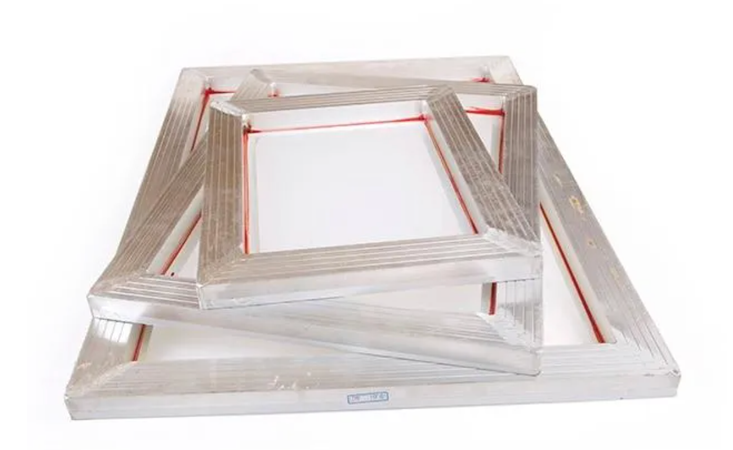
The higher the count, the less ink reaches the surface. That’s why mesh matters so much. A delicate line drawing won’t survive a low mesh screen, and heavy graphic blocks won’t print properly through a fine mesh. We stock aluminium silkscreen printing frames pre-fitted with 43T mesh that are light, strong and easy to clean, giving you a reliable option for printing on both paper and fabric.
Getting familiar with mesh numbers lets you think ahead and match your materials to your goal. It’s not a rulebook, but it gives you a helpful base to work from before you test and tune.
Matching Mesh Count to Ink Type
Ink type goes hand in hand with mesh choice. Thick, textured inks struggle to pass through tight mesh, while thinner ones need it to stay sharp.
Here’s a quick breakdown:
- Thicker inks (like puff additives or opaque acrylics) won’t work well with fine mesh counts
- Water-based inks or thin pigment loads need higher mesh, or the excess will bleed
- Prints containing mica, flake pigments, or other additives may clog high-count meshes
Pigment size plays a part, too. Some inks carry larger particles, even if the base formula is watery, so pairing them with a mid-range mesh is sometimes the best middle ground. Always stir inks well and strain if needed before you print. For more control over coverage, we carry silk screen mediums such as Matisse Print Paste, formulated for use with Matisse Colours when screen printing on paper, and Permaset Aqua Print Paste, a transparent screen ink extender for Permaset inks that helps adjust opacity when layering colours.
Design Detail and Print Surface Considerations
The detail of your design has a direct impact on mesh selection. Fine outlines, small text, or greyscale shading shouldn’t be done on a loose mesh because sharp edges will blur.
Here’s how design detail influences mesh choice:
- Large shapes with single colours can use lower mesh counts
- Sharp outlines, line art, or type need a finer screen to hold the shape
- Tone work like halftones or gradients should stick to higher mesh, such as 100T or above
The print surface matters just as much. Paper is smoother and holds fine detail better than textured or absorbent fabrics. But porous surfaces like cotton or wood may need more ink flow and more room for the ink to sit.
For example:
- A fine art print on hot press paper may benefit from a high-count mesh
- A fabric print on canvas could need a lower mesh count to push through properly
So it's not just about what you're printing, but also where. The surface has its own influence on how well the ink settles and shows up, and different surfaces respond differently to pressure and drying times.
Weather, Workspace, and Preparation Tips
Mesh choice isn’t just about materials. Heat, airflow, and humidity all play a role, especially during the summer. Hot conditions soften emulsion quicker, and indoor spaces without ventilation let ink sit for too long on the screen.
A few things to keep in mind:
- Warm air causes some inks to dry faster on mesh, clogging it mid-print
- Damp areas or humid days can change how ink seeps into surfaces
- Open windows, fans, or air conditioning can shift things during longer sessions
It helps to test the setup before printing in full. Run a quick check with a test card or scrap fabric. And if you’re not sure about the air quality or room heat, avoid storing screens there too long. Mesh screens last longer with a cool resting spot, away from windows or heater vents.
For shared spaces or studios that aren’t temperature controlled, using mesh in the 61T to 77T range offers some flexibility. It may not be perfect for every process, but it’ll get you through most art sessions without trouble.
When to Try a New Mesh Count
You can usually spot a mismatch between mesh and material pretty quickly. Ink pooling or blotching at the bottom of the stencil is a sure sign. If you’re pressing hard and still not getting a complete mark, your mesh might be too tight.
Here’s what to look for:
- Clean designs lose their edges once printed
- Thin lines vanish or fill in
- Ink won’t pass through easily, even after stirring
That’s a good time to test another mesh screen. Printing the same design using two different meshes can show you which setup fits the job. You don’t need every mesh count in your cupboard, just the ones that suit your typical work.
Over time, building some awareness of how your ink and surfaces behave can guide your hand when selecting the mesh. You’ll make more confident decisions and save time on trial and error.
Better Prints Start With Proper Mesh
Mesh decisions don’t sound exciting, but they shape the quality of every print long before the ink meets the surface. Silk screen printing art depends on a tight balance of ink flow, texture, and design precision, and mesh sits at the centre of that process.
By making simple changes based on your media, image style, and work setting, you get stronger and more consistent prints. It only takes a little adjustment to keep the process from becoming more difficult than it needs to be.
A setup that works with you instead of against you makes every print session smoother. Fewer mistakes, better outcomes, and a more enjoyable way to keep developing your technique.
Reassessing your process and rethinking how your setups handle ink and detail is a great opportunity to examine your materials and tools. The right combination makes it easier to get consistent prints without fighting the mesh. We have stocked our shelves with everything we trust for clarity, control, and colour accuracy, especially when it comes to silk screen printing art. At Art Supplies Castlemaine, we are always here to help you work smarter with what you have, so give us a call or stop by if you have any questions.